
Living well
Changes that can make a parent's home easier to live in
From where the saucepans live to a second banister, there is a wide range of changes people consider. Here is that range, and why the right ones are worked out with your parent.
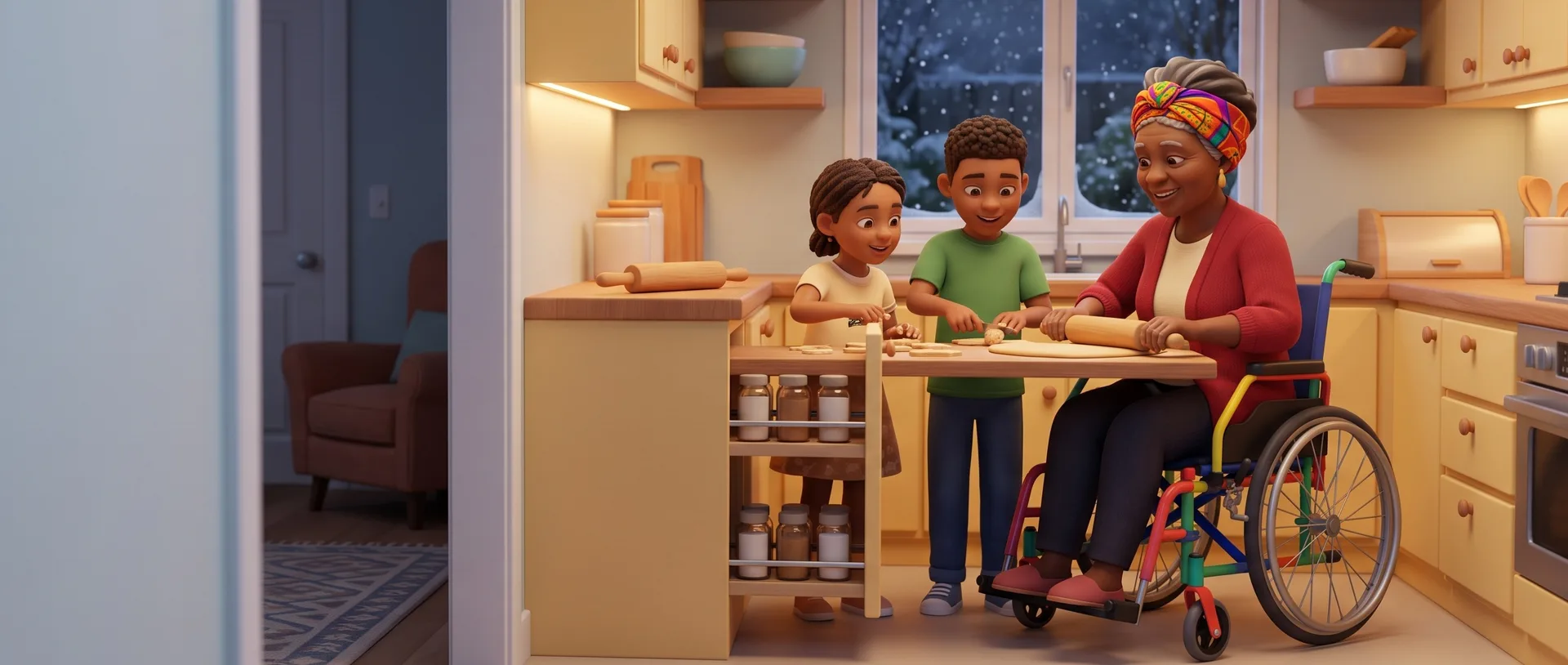
The kettle has sat on the same corner of the worktop for thirty years. The good saucepans are on the top shelf, where they always were, and the hall light switch is at the far end of a dark corridor. A home grows up around the person who lives in it, and what they need from it can change over the years. This page lays out the kinds of changes people consider, from the very small to the structural. It is information, not medical advice, and it stops short of saying which change your parent's home needs: that is worked out with them, and often with a professional who can see the house.
Begin with the small, everyday things
Canada's public health agency, in its home-safety guide for seniors, says plenty of well-placed, well-diffused lighting is important. The same guide covers lighting in rooms and hallways, clear routes through the house and the path from the bed to the bathroom. It also touches on keeping heavy things in lower cupboards and lighter ones higher up, and on a night light or another source of light. Age Cymru lists cupboards with pull-out shelves and outdoor lights among the adaptations that could make everyday life easier.
What we don’t claim here
We don’t tell you whether a change is serious, or where ordinary ends and concerning begins. No authority sets that threshold, so we don’t imply one.
Who can weigh it: your parent’s doctor or care team, who know the person and the situation. Where to take it →
Know that some changes are bigger
The NHS describes home adaptations as changes to a home that can be small or large. Its examples run from a banister or stairlift and a grab rail by the bath to a walk-in shower, wider doorways, lower worktops, a ramp or step rail outside, and outside lighting. The Canadian guide mentions handrails on both sides of the stairs and grab bars in the bathroom. Canada's federal, provincial and territorial seniors' ministers suggest that changes to the home may help as someone ages, depending on their situation, and give widening doorways for a walker or wheelchair, or fitting a chairlift or elevator, as things a person may choose. These are kinds of adaptation an occupational therapist or care team may look at, not a list to work through.
Put their wishes first
The UN Principles for Older Persons, from 1991, say older people should be able to live in surroundings that are safe and adaptable to their own preferences and changing capacities. Canada's seniors' ministers describe looking at whether a home can meet changing needs as a key step in planning for independence. It is their home, so their view on what stays and what changes is the starting point, and Keeping a parent's privacy when you help at home takes that idea into the help itself.
Bring in a professional who looks at the home
The Royal College of Occupational Therapists says an occupational therapist may help with how someone does things, provide equipment or adjust their surroundings. The Canadian association of occupational therapists notes that occupational therapy can happen in a person's home, and one Irish public community service says its work after an assessment may include advice on adapting the home. In the NHS's description of a home assessment in England, an occupational therapist visits, asks questions and walks round with the person, and they work out together what is needed. The NHS suggests the person mentions everything they find difficult, even something as small as opening a cupboard, and, if it might help, has a friend or relative there, who can also take notes.
Ask the care team where to start
A question about any particular change is worth bringing to their doctor or care team, and they are the people to ask how the route works. Whether a parent is able to make a particular decision for themselves is not something a family is asked to settle on its own; where that is in question, it is for their doctor or care team, and the formal side differs by where your parent lives.
When to ask a professional
This guide stops where a professional’s judgment starts. Bring what you’ve noticed, plainly, to your parent’s doctor or care team.
Sources
The outside sources this guide draws on.
Primary: Taken from the official source itself, and cited directly. Secondary: Established in recognised guidance, summarised here.
- PrimaryNHS (England), Home adaptations, reviewed 2025
- PrimaryPublic Health Agency of Canada, The Safe Living Guide: A Guide to Home Safety for Seniors, revised 2015
- SecondaryAge Cymru (Wales), Adaptations and equipment to make home tasks easier, no date given
- PrimaryEmployment and Social Development Canada and the Federal, Provincial and Territorial Seniors Forum, Thinking about aging in place, no date given
- PrimaryUnited Nations, Principles for Older Persons (General Assembly resolution 46/91), 1991
- PrimaryRoyal College of Occupational Therapists (UK), Occupational therapy, no date given
- PrimaryHSE (Ireland), Mayo community occupational therapy service (adults), no date given
- PrimaryCanadian Association of Occupational Therapists, What is Occupational Therapy?, 2024
Articles from this department
More in this department


How we source
Carefulness, made visible.
Named, not counted
Each guide names its sources and tags each one Primary or Secondary. It never counts sources at you.
Holding back
Where a part isn’t confirmed, a guide runs shorter and says what is missing.
Naming the limit
Every guide names where its authority ends, and who to ask instead.