
Safe at home
When getting around the home gets harder
This page will not say why moving has become harder or prescribe exercises or home fixes. It helps you bring a clear picture of what you have seen to your parent's doctor or care team.
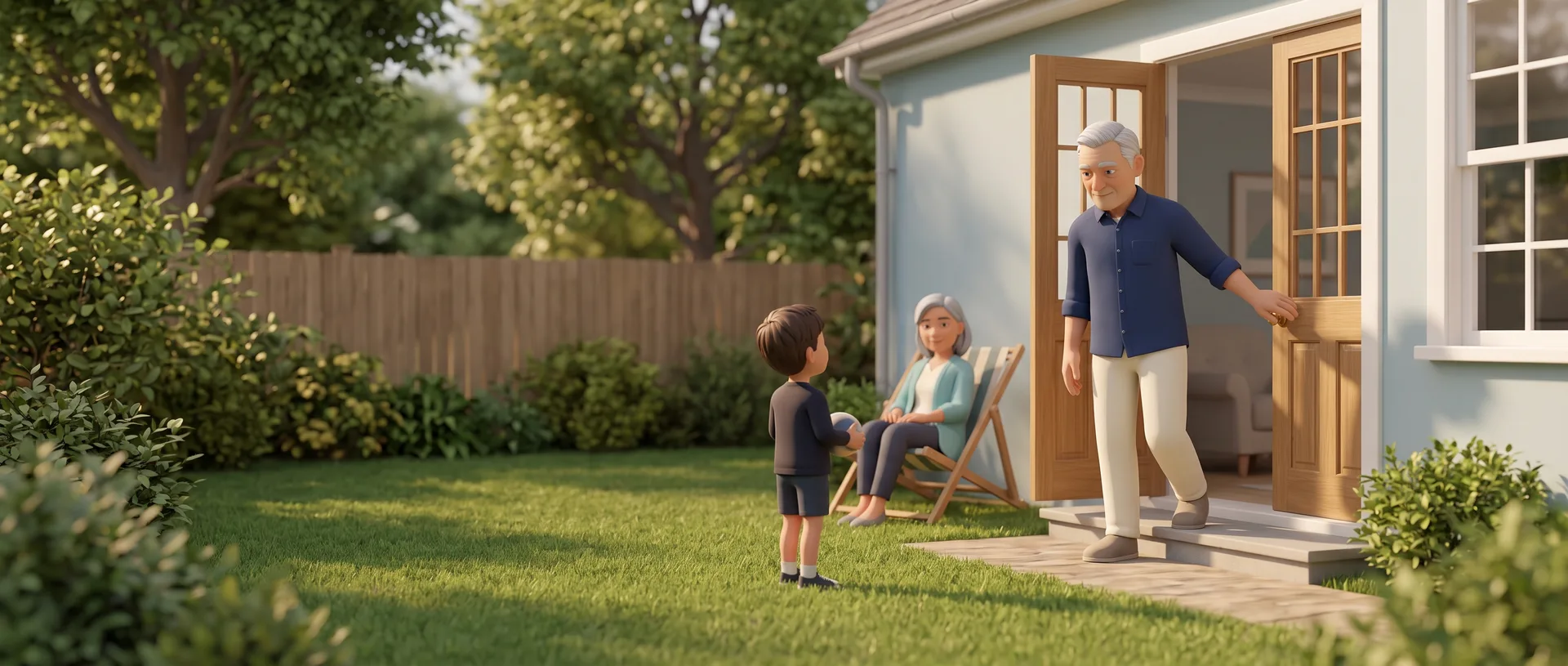
You're walking with your mum to the corner shop, the same route you've taken together for years, and partway along you notice you've slowed your step to match hers. It's a small adjustment, and it can leave a question behind it. This page won't say why getting around might have become harder, and it won't suggest exercises or changes to the house. It is information, not medical advice: a way to describe what you have seen, and a look at who can help consider it with your parent.
What families notice
Families describe changes in getting around in everyday words like these:
- reaching for furniture, walls, or a rail to steady themselves
- catching on thresholds, rugs, or uneven spots around the home
- a stumble, a trip, or a near-miss you happened to see
- taking the stairs more slowly, or one step at a time
- finding it harder to rise from a chair or the bed
- seeming less steady, or more cautious, on their feet
- going out less, or avoiding places that used to be easy
Any one of these is worth noticing. None of them, on its own, is a conclusion.
Each of them can come about for many different, everyday reasons, and no list can tell those reasons apart for one person.
In case the word "fall" comes up in a conversation with the care team, it helps if everyone means the same thing by it. The World Health Organization defines a fall as an event in which a person comes to rest inadvertently on the ground, floor or another lower level.
What we don’t claim here
We don’t tell you whether a change is serious, or where ordinary ends and concerning begins. No authority sets that threshold, so we don’t imply one.
Who can weigh it: your parent’s doctor or care team, who know the person and the situation. Where to take it →
What health bodies suggest raising with a doctor
Some health bodies, writing for older people themselves, suggest a conversation with a doctor. The US Centers for Disease Control and Prevention suggests asking a doctor or healthcare provider to evaluate the risk of falling. HealthLink BC, in British Columbia, Canada, notes that each person's risks are a bit different and suggests talking to a doctor about what might be most helpful.
The World Guidelines for falls prevention, written for clinicians in 2022, describe engaging an older person's own beliefs, attitudes and priorities about falls as essential.
What an occupational therapist does
The Royal College of Occupational Therapists in the UK says an occupational therapist helps people of all ages overcome challenges with everyday tasks or activities, including support with self-care, household chores and getting out and about. As we read it, how to reach one differs by where your parent lives, and the route may not always run through a doctor. Their doctor or care team is one place to ask.
Putting it into words
Your parent's own account comes first: how getting around feels to them, what has changed in their view, and what matters to them about it. Alongside it, what you can offer is a plain description of what you have seen, where and roughly when, in your own words and without a reason attached. That picture is worth bringing to their doctor or care team, with your parent in the conversation.
Changes to the home itself are a separate subject, covered in Changes that can make a parent's home easier to live in. For changes beyond moving around, see Changes families often notice.
If help is needed sooner
Some situations need help sooner than an appointment can give it, and where that line falls is not something this page sets. How to reach urgent help, wherever you are gives the routes to emergency services for each place it covers.
When to ask a professional
This guide stops where a professional’s judgment starts. Bring what you’ve noticed, plainly, to your parent’s doctor or care team.
Sources
The outside sources this guide draws on.
Primary: Taken from the official source itself, and cited directly. Secondary: Established in recognised guidance, summarised here.
- PrimaryWorld Health Organization, Falls fact sheet, 2021
- PrimaryCenters for Disease Control and Prevention (US), Preventing Falls and Hip Fractures, 2026
- SecondaryHealthLink BC (Canada), Preventing Falls in Older Adults, 2022
- PrimaryWorld Guidelines for Falls Prevention and Management for Older Adults, Age and Ageing, 2022
- PrimaryRoyal College of Occupational Therapists (UK), What is occupational therapy, no date given
Articles from this department
More in this department
How we source
Carefulness, made visible.
Named, not counted
Each guide names its sources and tags each one Primary or Secondary. It never counts sources at you.
Holding back
Where a part isn’t confirmed, a guide runs shorter and says what is missing.
Naming the limit
Every guide names where its authority ends, and who to ask instead.