

Understanding care options, services and support, for everyone connected to someone who needs care.
First principle
Noticing is not diagnosing.
We show you what changes in a day at home, and we stop there. What a change means is a question for you and a professional, never an answer we’d invent.
How we work →Safe at home
Departments
The nine questions families actually ask.
Each is a department of this publication, not a topic label: a standing section with its own editors, its own sources, and its own pace of publication.
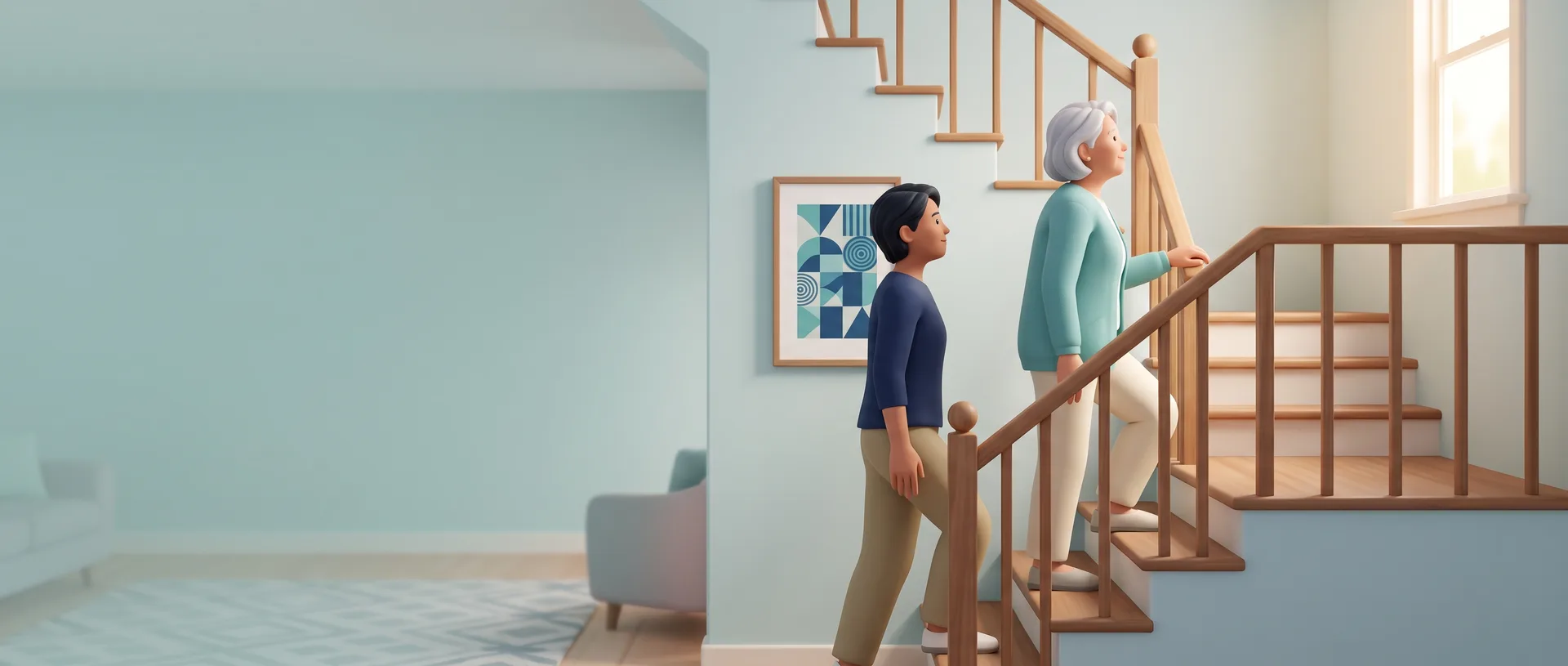 Is my parent still safe at home?What a change at home can reasonably tell you, and what it cannot.
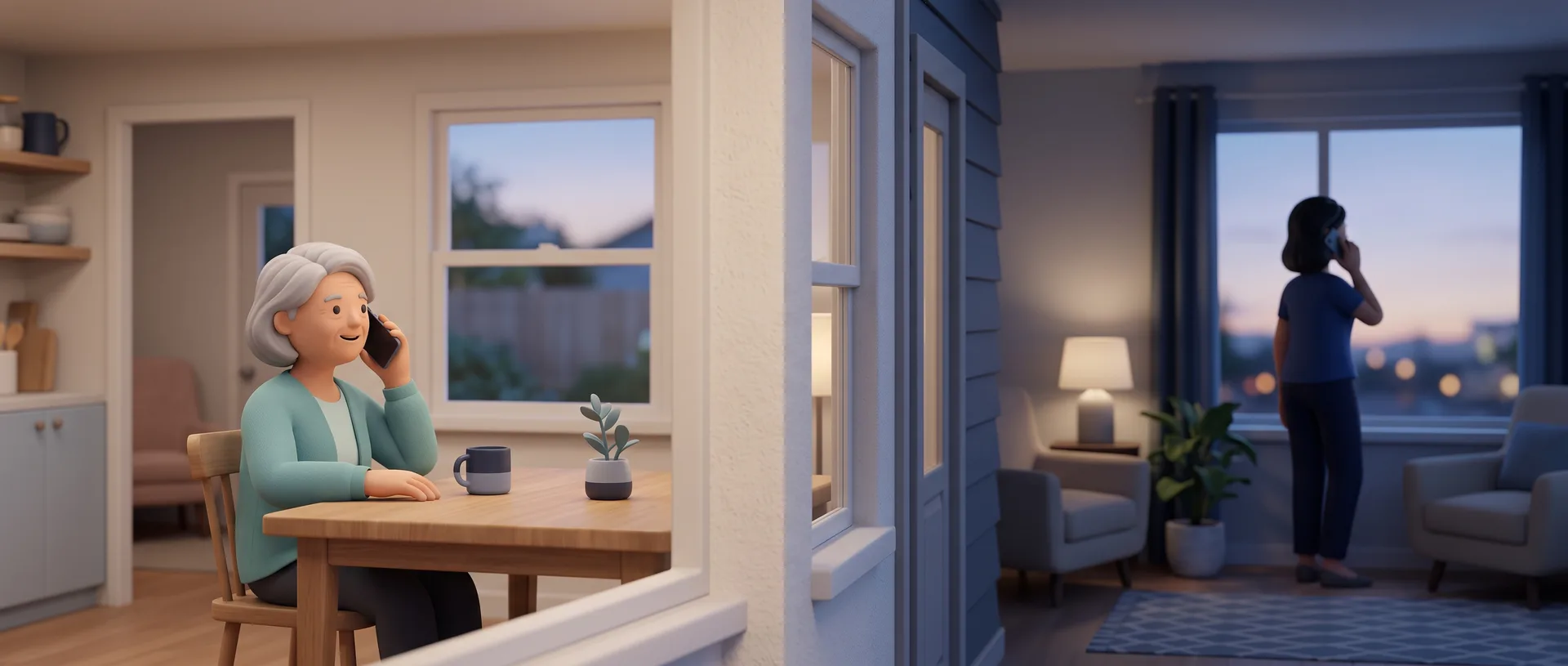 Caring from far awayStaying genuinely useful when you are not in the room.
 Starting the conversationHow families raise a difficult subject without losing the person.
 Getting help at homeChoosing, arranging and reviewing support that comes to the door.
 Paying for careWhat public funding for help at home covers, where it stops, and how families talk about money.
 How the care system works where you areWhere the public route to help at home starts, what an assessment is, and how decisions can be questioned, market by market.
 Looking after yourselfThe carer is part of the arrangement, not an afterthought to it.
 Living well at homeKeeping an ordinary life ordinary for as long as it can be.
 How technology helps families stay informedA restrained look at what remote information can and cannot tell a family.
 For care providersPractice guides for people who run home care services: planning visits, keeping the same carers with the same people, routes, keeping families informed and care records.
From WeHomeCare
This section describes WeHomeCare's own product.
WeHomeCare makes software that home care providers can use to plan, carry out and record care visits.
 Care planIn WeHomeCare, care workers can see the tasks and instructions from the person's care plan within each visit.
 Care timelineWeHomeCare can be set up so families see when each visit took place, in one place.
 Visit updatesWeHomeCare can be set up so a family member far away hears about a visit from the provider.
 MessagesWeHomeCare can be set up so family members and the care team write to each other in one place.Visit updates and messages from a care provider are not a way to reach urgent help.
 Photos and videosWeHomeCare can be set up so a family far away sees photos and videos from a care visit.
 Reports for familiesWeHomeCare can be set up so families read a written account of care visits.
We think your parent should decide what their family sees, and you can ask any care provider how it makes that possible.
From WeHomeCare: all pagesFrom the editors
Recently, and considered.
Guides are published when they are ready, and revised in the open. Each one states plainly what it does not claim.
Latest
Shorter pieces, as they arrive.
Articles read around the questions. Each carries one department and one subject.
- Keeping up with a parent's life from far away, and whose news it is to shareWhat Irish guidance and an Ontario home care organisation say about asking a person's consent before their information is shared, and a UK charity's view that newer forms of help for older people should not be seen as a substitute for human contact.Family and consentFrom far away
- Who your parent names as next of kin, and what that does not meanInformation from Ireland and England describes next of kin as someone a person chooses, who need not be a relative. What being named should mean, and why it is not the same as deciding for them.Family and consentFrom far away
- Before anything new comes into a parent's home, whose decision it isWhatever is being suggested, the starting point is your parent's say. How families can raise it, listen, and leave the decision where it belongs.Family and consentThe conversation
- How information moves between hospital and home careWhen a parent comes home from hospital, information has to travel with them. What guidance in some places says should be passed on, and to whom, and what you and your parent can ask before and after discharge.Providers and the systemGetting help
- What checks a carer may go throughBefore a paid carer comes to the door, an agency may check a few things. The kinds of checks that exist, and how you and your parent can ask about them.Providers and the systemGetting help
- What you can ask about your parent's care recordsWhat home care guidance and privacy regulators in some places say about your parent's care records, including asking to see what is held and to have it corrected. What you and your parent can ask, and who to ask.Providers and the systemGetting help





From the editors
You’re reading this carefully. That’s the right way to do this.
We won’t tell you it will be easy, or that everything will be fine. We don’t know that, and we won’t pretend to. What we can tell you is the truth, as clearly as we’re able, and where our knowing ends we’ll point you to the people whose job it is to know.
You came here worried about someone you love, and you’re taking it seriously. That matters more than getting everything right. Whatever comes next, you won’t be working it out alone.