
Eating, weight and daily routine
The shape of a day belongs to the person living it
Toast at the counter, lunch at one, a neighbour with a cake tin on Thursdays. A look at meals as company and habit, and at who decides how a day runs.
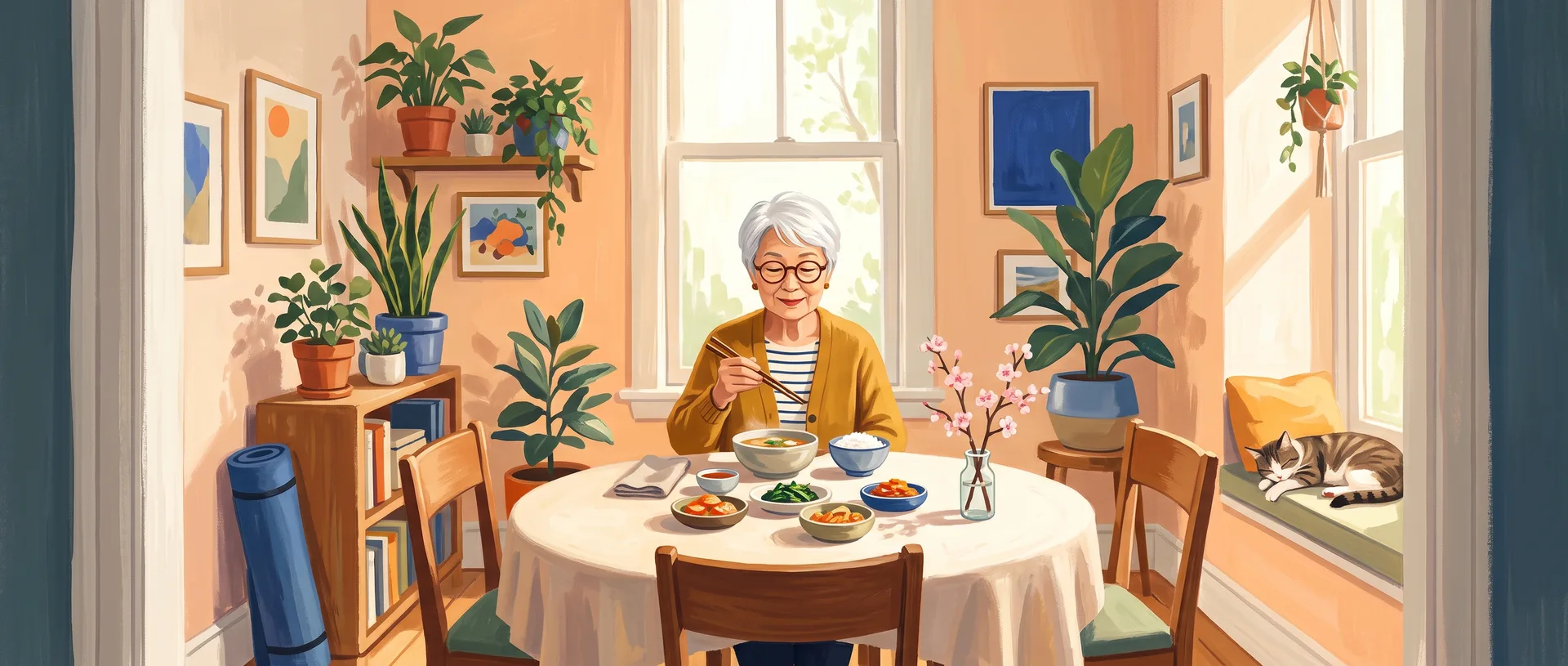
Breakfast is toast and marmalade standing at the counter, with the back door open to the garden. Lunch is the proper meal, at the table, at one o'clock. Thursday afternoon belongs to the neighbour who comes round with a cake tin, and Sunday supper is whatever is left, eaten from a tray. Some of it never moves, some of it shifts from week to week, and none of it was ever written down. This is information rather than medical advice, and it is not about food as nutrition at all. There is nothing here on what anyone should eat, or how much, and that is deliberate.
A day already has an owner, and it is the person living it. Meals are one of the places that shows.
People make their own days
The Canadian Association of Occupational Therapists (CAOT) describes occupations as everything people do to occupy themselves, including looking after themselves. It says people make choices about the occupations they take part in to create a routine or daily pattern, and that occupation gives meaning to life.
The WHO states that there is no typical older person, and it describes healthy ageing in terms of being able to be and do what people have reason to value, including making decisions and keeping up relationships. As we read it, a parent's own way of running a day is part of what they have reason to value.
What we don’t claim here
We don’t tell you whether a change is serious, or where ordinary ends and concerning begins. No authority sets that threshold, so we don’t imply one.
Who can weigh it: your parent’s doctor or care team, who know the person and the situation. Where to take it →
A meal is company and habit
Health Canada's food guide treats meals as more than what is on the plate. It describes eating with family, friends or neighbours as a great way to connect, and says that by eating with others you can enjoy quality time together and share food traditions across generations and cultures. Its guidance for seniors says eating with others is great for the company. Health Canada also counts enjoying your food, including the many food-related activities that go along with eating, as part of healthy eating.
Habit and history run through it too. Health Canada says eating habits can be shaped by many things, including cultures and food traditions, that recipes and food traditions are a part of family history, and that in many cultures food and food traditions play a big part in connecting people. The cake tin on a Thursday is a small piece of that history.
Health Canada's advice for seniors is written to older people themselves. It notes that for an older person who lives alone, sitting down to a meal by themselves can feel lonely, and it offers them ideas such as choosing a comfortable place to eat. The choice of place, in that advice, is theirs.
Questions about appetite, weight or diet are a separate matter, and they are worth taking to their doctor or care team rather than reading into a mealtime. When a parent's eating or weight seems to be changing is the place on this site for that.
Care at home can follow the same shape
Guidance written for home care services points in a similar direction. NICE guidance on home care for older people in England (NG21, 2015) asks that support focus on what people can or would like to do to keep their independence, not only on what they cannot do. The same NICE guidance in England asks those planning home care to work in a way that maximises choice and control. In this publication's view, England's NICE guidance describes help that fits into a day already shaped by the person, not a day reshaped around the help. Keeping meals and daily routines feeling like theirs and Helping a parent keep doing things for themselves are the guides for the day-to-day detail.
The toast at the counter, the one o'clock lunch and the cake tin are not a schedule anyone has to keep. They are what the day looks like when your parent is the one shaping it.
When to ask a professional
This piece stops where a professional’s judgment starts. Bring what you’ve noticed, plainly, to your parent’s doctor or care team.
Sources
The outside sources this article draws on.
Primary: Taken from the official source itself, and cited directly.
- PrimaryCanadian Association of Occupational Therapists, position statement, Occupational Therapy Now, no date given
- PrimaryWorld Health Organization, Ageing and health fact sheet, 2025
- PrimaryWorld Health Organization, Healthy ageing and functional ability (questions and answers), 2020
- PrimaryHealth Canada, Canada's food guide: Eat meals with others, updated 2026
- PrimaryHealth Canada, Canada's food guide: Enjoy your food, updated 2026
- PrimaryHealth Canada, Canada's food guide: cultures and food traditions, no date given
- PrimaryHealth Canada, healthy eating for seniors: Eat with others, no date given
- PrimaryNICE (England), Home care: delivering personal care and practical support to older people living in their own homes (NG21), 2015
Related reading


More articles in this department
How we source
Carefulness, made visible.
Named, not counted
Each piece names its sources and tags each one Primary or Secondary. It never counts sources at you.
Holding back
Where a part isn’t confirmed, a piece runs shorter and says what is missing.
Naming the limit
Every piece names where its authority ends, and who to ask instead.