
Safe at home
When a parent's eating or weight seems to be changing
Rather than tell you what it means, this page helps you describe what you have seen. It sets out what is useful to bring to your parent's doctor or care team.
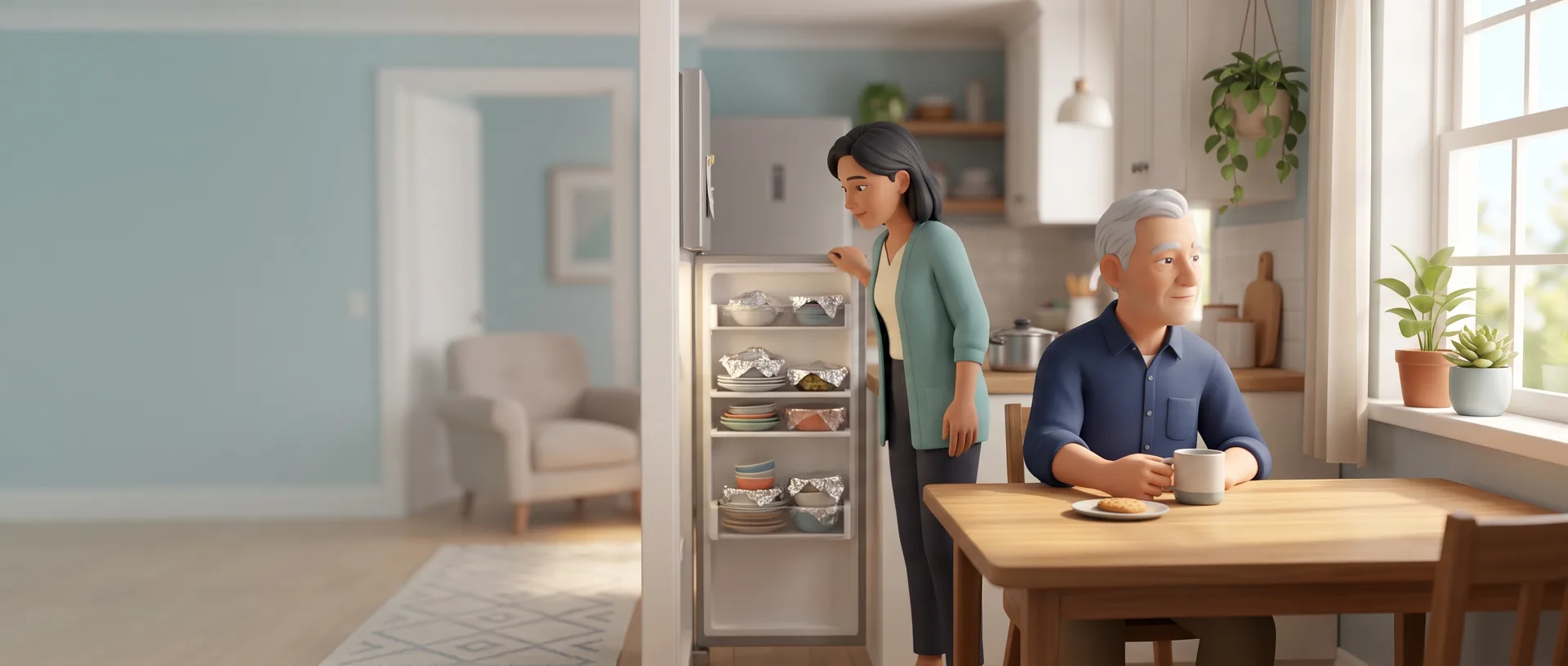
You're making two cups of tea in your dad's kitchen, the way you always do when you visit, and the talk drifts to what he's been having for dinner lately. A change around food can be hard to know how to raise. This page won't say what any change means, and it offers no diet or nutrition advice. It is information, not medical advice, to help you describe what you have seen to your parent's doctor or care team.
Small changes around meals
Here are some of the things families mention noticing around food and meals:
- meals left half-eaten, or smaller portions than before
- less interest in cooking, shopping, or planning meals
- clothes, belts, or rings fitting differently than they used to
- skipping meals, or eating at unusual times
- sticking to the same few easy foods, where there used to be more variety
- eating less when they're on their own than when there's company
- mealtimes taking noticeably longer than they used to
You might recognise one of these, several, or something not on this list at all. None of them, on its own, is a conclusion. They're simply the kinds of observations that are worth holding onto and mentioning.
What we don’t claim here
We don’t tell you whether a change is serious, or where ordinary ends and concerning begins. No authority sets that threshold, so we don’t imply one.
Who can weigh it: your parent’s doctor or care team, who know the person and the situation. Where to take it →
Many possible explanations
A 2022 report from an international task force of frailty researchers describes appetite in older people as influenced by many different factors. Patient information from the American Academy of Family Physicians says a number of things may affect the amount and type of food that older adults eat. Neither names a reason for any one person, and nothing here will.
On weight, the NHS in England describes unintentional weight loss as losing weight without changing your diet or exercise routine, and says it can have many different causes.
What the NHS in England describes a GP doing
The NHS in England says a GP will ask about the person's health and may arrange some tests or scans. The NHS in England also says that, depending on the possible cause, a GP may refer the person to a specialist. Who is involved, and how, differs by where your parent lives, so their own doctor or care team is the place to ask.
What to take with you
What you can bring is a plain description in your own words: which of the things above you have seen, roughly when you first noticed them, and what mealtimes look like now compared with before. Your parent's own account of how they have been eating belongs at the centre of it, and it is theirs to give. A description like that is worth taking to their doctor or care team as it is, without a theory attached.
Questions can help too, put as questions rather than conclusions. Is this something to look into? Who else, if anyone, might be involved?
Meals and routines that still feel like your parent's own are covered in Keeping meals and daily routines feeling like theirs. For changes beyond eating, see Changes families often notice.
When it can't wait
Telling an urgent moment from one that can wait is not something this page does. Some situations do call for urgent help, and how to reach it in each place it covers is set out in How to reach urgent help, wherever you are.
When to ask a professional
This guide stops where a professional’s judgment starts. Bring what you’ve noticed, plainly, to your parent’s doctor or care team.
Sources
The outside sources this guide draws on.
Primary: Taken from the official source itself, and cited directly. Secondary: Established in recognised guidance, summarised here.
- PrimaryNHS (England), Unintentional weight loss, reviewed 2025
- SecondaryICFSR Task Force, report on appetite in older people, The Journal of Frailty and Aging, 2022
- SecondaryAmerican Academy of Family Physicians (US), Preventing Malnutrition in Older Adults, reviewed 2025
Articles from this department
More in this department


How we source
Carefulness, made visible.
Named, not counted
Each guide names its sources and tags each one Primary or Secondary. It never counts sources at you.
Holding back
Where a part isn’t confirmed, a guide runs shorter and says what is missing.
Naming the limit
Every guide names where its authority ends, and who to ask instead.