
Money, benefits and paperwork
Knowing where the important papers are
One known place for the papers that matter, kept with your parent's agreement. What goes in is theirs to decide.
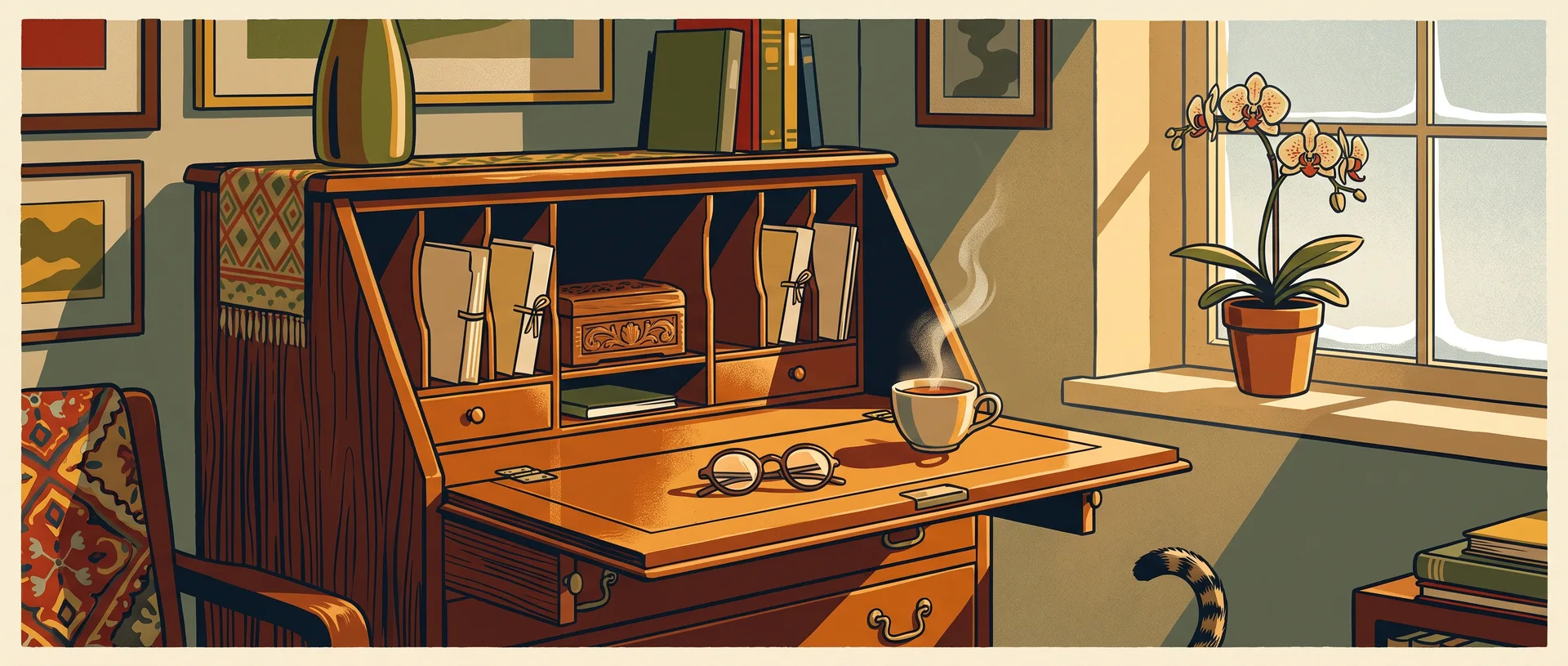
On the journey home after a weekend at your parent's, a small thing surfaces. You know where they keep the biscuits, the spare key and the good scissors. You could not say where the letter from the clinic ended up, or which drawer holds the names and numbers they rely on. What follows is information, not medical advice. It does not tell you what your parent's papers must hold; it is about knowing where things are, and whose call that is.
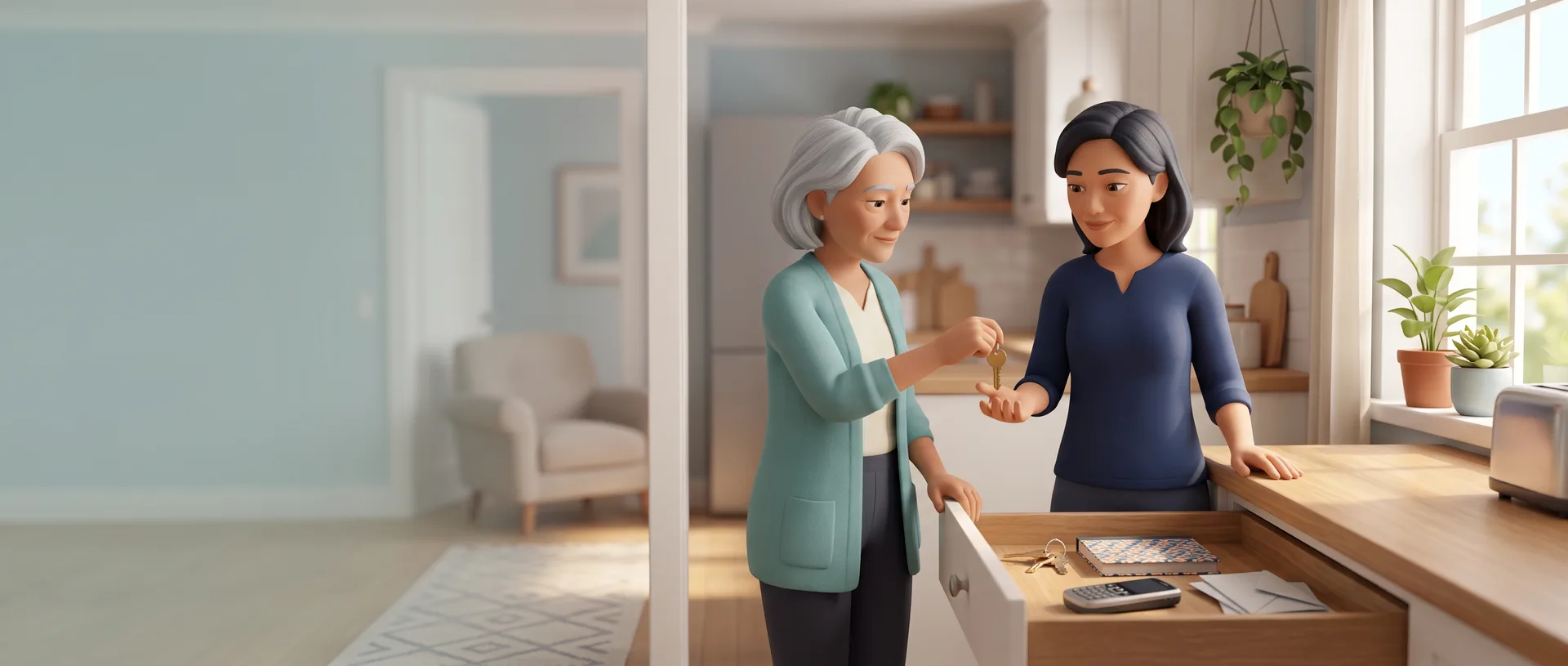
Knowing where the important things are, gathered in one place your parent has agreed to, is a quiet kind of help. What goes into that place is theirs to decide.
One place, and the person it belongs to
Age UK, a charity for older people in the UK, offers a record book designed to keep the important information a person might need in one place, and says what they fill in, and when, is up to them. The same guidance suggests letting someone you trust know about it, and keeping it safe. A Canadian government checklist on ageing in place includes, as a planning item, that loved ones know where a person's important documents are.
For a family at a distance, that matters in its own way. The US National Institute on Aging lists helping to find, organise and update important paperwork and records among the tasks a family member who lives far away may be able to take on. Getting organized: documents, contacts, and access covers the practical side.
What we don’t claim here
We don’t tell you whether a change is serious, or where ordinary ends and concerning begins. No authority sets that threshold, so we don’t imply one.
Who can weigh it: your parent’s doctor or care team, who know the person and the situation. Where to take it →
The kinds of things people gather
The kinds of information the sources name are everyday ones. The National Institute on Aging describes keeping a list of important contacts, kept up to date.
A state government health site in Victoria, Australia, suggests it may help a carer to use a single notebook or diary to record all of the person's appointments.
Medicines have a place here, but the list belongs to the person who takes them. Ireland's health service, the HSE, says an up-to-date written or printed list of the medicines a person takes can help, including when they are discussing their medicines with a healthcare professional. The HSE in Ireland suggests bringing the list to healthcare appointments, and notes that the healthcare team may not already have this information. In guidance for the person who keeps the list, the HSE says it can be helpful to pass a copy to a family member or carer, which leaves the sharing as that person's own choice. Anything about the medicines themselves is for their doctor, pharmacist or care team.
Keeping it current, and keeping it theirs
A folder of papers is only as useful as it is current. The HSE stresses keeping a medicines list current, and recommends updating it regularly, since medications or dosages may change.
Keeping it theirs matters just as much. These are your parent's papers, about your parent's life. Which ones go in, who gets to know where they are and what stays private are questions for them, and Keeping a parent's privacy when you help at home comes at that from the side of everyday help. The formal and financial side differs by where your parent lives.
The National Institute on Aging says it may be useful to keep a caregiving notebook with details such as the person's medical care, contacts and other key information, kept in a central place that everyone involved can reach, reviewed regularly and updated as needed. A paper notebook in a known spot is about as plain as help gets.
None of this has to be finished at once. Knowing where things are is a modest aim, and it can be shared out over many visits and conversations, at the pace your parent sets.
When to ask a professional
This piece stops where a professional’s judgment starts. Bring what you’ve noticed, plainly, to your parent’s doctor or care team.
Sources
The outside sources this article draws on.
Primary: Taken from the official source itself, and cited directly.
- PrimaryAge UK, LifeBook, no date given
- PrimaryNational Institute on Aging (US), Sharing Caregiving Responsibilities, reviewed 2023
- PrimaryNational Institute on Aging (US), What Is Long-Distance Caregiving?, reviewed 2023
- PrimaryGovernment of Canada, Thinking about your future? Plan now to Age in Place: A checklist, 2025
- PrimaryHSE (Ireland), Get Started: Know Check Ask, no date given
- PrimaryHSE (Ireland), HSE encourages people to use a medicines list (press release), 2025
- PrimaryBetter Health Channel, State of Victoria (Australia), Managing appointments, reviewed 2015
Related reading



More articles in this department


How we source
Carefulness, made visible.
Named, not counted
Each piece names its sources and tags each one Primary or Secondary. It never counts sources at you.
Holding back
Where a part isn’t confirmed, a piece runs shorter and says what is missing.
Naming the limit
Every piece names where its authority ends, and who to ask instead.